In the ever-evolving world of longevity, brain health, and mitochondrial science, one small compound has been quietly gaining serious attention—PQQ, short for Pyrroloquinoline Quinone. Once considered a rare bacterial cofactor, PQQ is now recognized as a powerful bioactive nutrient with far-reaching implications for energy production, cognitive health, aging, and metabolic resilience.
If you’ve been hearing about PQQ in the context of mitochondria, anti-aging supplements, brain optimization, or cellular energy, you’re in the right place. This in-depth guide will walk you through what PQQ is, how it works, its science-backed benefits, optimal dosage, safety, and how it fits into modern longevity protocols—all in clear, human-friendly language.
What Is PQQ (Pyrroloquinoline Quinone)?
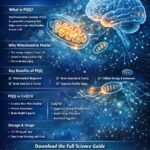
PQQ (Pyrroloquinoline Quinone) is a naturally occurring redox cofactor—a molecule that helps enzymes carry out oxidation-reduction reactions in the body. Unlike traditional vitamins, PQQ acts as a catalytic antioxidant, meaning it can participate in thousands of reactions without being used up.
What truly sets PQQ apart is its unique role in mitochondrial biogenesis—the creation of new mitochondria inside cells.
👉 Mitochondria are often called “the power plants of the cell”, and PQQ helps increase both their number and efficiency.
Why PQQ Is Not a Typical Vitamin
Although sometimes referred to as a vitamin-like compound, PQQ doesn’t fit neatly into classic vitamin categories.
Here’s why PQQ is special:
- It supports cell signaling, not just deficiency prevention
- It activates gene pathways linked to longevity
- It functions as a redox cycling molecule
- It influences mitochondrial quantity and quality
Because of these properties, researchers often describe PQQ as a novel biofactor rather than a standard micronutrient.
How PQQ Works in the Body
At a cellular level, PQQ works by influencing multiple biological systems simultaneously.
1. Mitochondrial Biogenesis Activation
PQQ activates pathways involving:
- PGC-1α
- CREB
- NRF-1
These pathways signal cells to produce new mitochondria, improving cellular energy capacity.
2. Redox Modulation
Unlike vitamin C or E, PQQ can be recycled thousands of times, making it a long-lasting antioxidant that reduces oxidative stress at the mitochondrial level.
3. Cellular Communication
PQQ improves cell-to-cell signaling, particularly in neurons, supporting brain plasticity and resilience.
Top Science-Backed Benefits of PQQ
1. Supports Mitochondrial Health and Energy Levels
One of the most well-documented benefits of PQQ supplementation is enhanced mitochondrial density and efficiency.
Practical impact:
- Improved physical energy
- Reduced fatigue
- Better cellular metabolism
This makes PQQ especially relevant for aging adults, biohackers, and people with chronic fatigue patterns.
2. Enhances Brain Function and Cognitive Performance
PQQ crosses the blood-brain barrier, where it supports:
- Nerve growth factor (NGF)
- Synaptic plasticity
- Memory formation
Studies suggest PQQ may help with:
- Mental clarity
- Focus and attention
- Age-related cognitive decline
Many users describe PQQ as a “clean energy for the brain”, without the jitters of stimulants.
3. Neuroprotection and Brain Aging
PQQ shows promise in protecting neurons against:
- Oxidative stress
- Excitotoxicity
- Mitochondrial dysfunction
These mechanisms are particularly relevant for long-term brain health and neurodegenerative risk reduction.
4. Anti-Aging and Longevity Pathways
PQQ influences key longevity-related mechanisms:
- Reduced oxidative damage
- Enhanced mitochondrial turnover
- Improved cellular stress response
Because mitochondrial decline is a hallmark of aging, PQQ is increasingly used in longevity-focused supplement protocols.
5. Cardiovascular Health Support
Emerging research links PQQ to:
- Improved mitochondrial function in heart cells
- Reduced inflammation
- Better lipid metabolism
This may support overall cardiovascular resilience, especially in metabolically stressed individuals.
6. Anti-Inflammatory Properties
PQQ modulates inflammatory pathways by:
- Reducing pro-inflammatory cytokines
- Improving mitochondrial signaling
- Limiting oxidative triggers of inflammation
This makes it relevant in chronic low-grade inflammation, often referred to as “inflammaging.”
Natural Food Sources of PQQ
PQQ is found in very small amounts in certain foods, including:
- Natto (fermented soybeans)
- Green tea
- Papaya
- Parsley
- Green peppers
- Tofu
- Kiwi
⚠️ Important note:
Dietary intake alone is usually insufficient to reach therapeutic levels used in research, which is why supplementation is common.
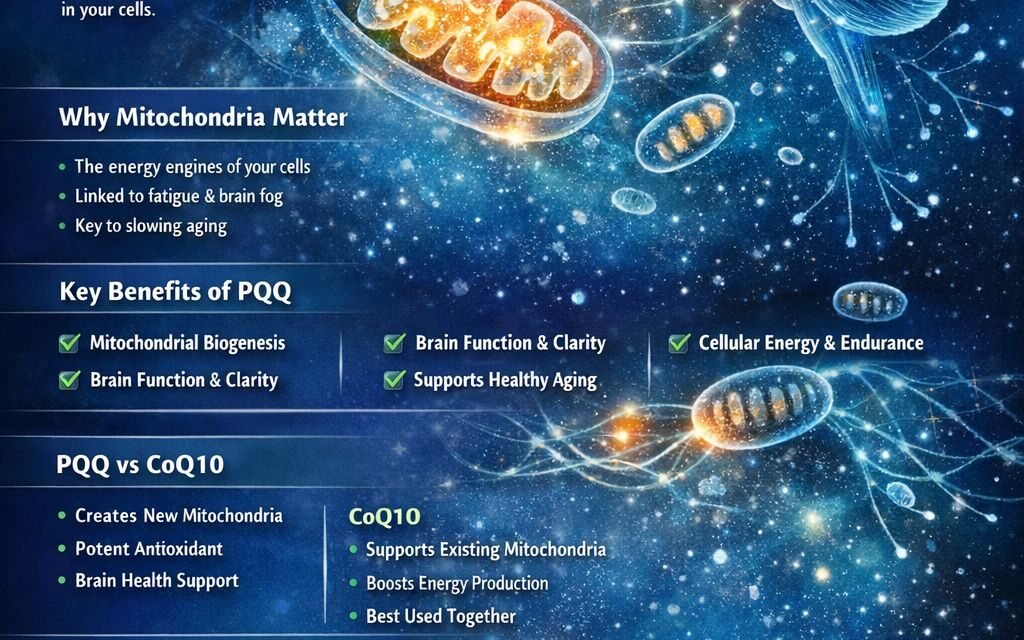
PQQ vs CoQ10: What’s the Difference?
Although often mentioned together, PQQ and CoQ10 are not the same.
| Feature | PQQ | CoQ10 |
| Main Role | Mitochondrial biogenesis | Electron transport |
| Action | Creates new mitochondria | Improves existing ones |
| Antioxidant | Catalytic (recyclable) | Traditional |
| Brain Effects | Strong | Moderate |
🔥 Best practice: Many longevity experts recommend PQQ + CoQ10 together for synergistic mitochondrial support.
Recommended Dosage of PQQ
Most human studies and clinical use suggest:
Typical Daily Dose
- 10–20 mg per day
Advanced Longevity Protocols
- Up to 40 mg per day, under professional guidance
Best time to take PQQ:
- Morning or early afternoon
- With food (preferably containing healthy fats)
Is PQQ Safe? Side Effects and Tolerability
PQQ is generally considered safe and well-tolerated.
Possible Mild Side Effects
- Headache (rare)
- Restlessness if taken late in the day
- Mild digestive discomfort (uncommon)
Who Should Be Cautious
- Pregnant or breastfeeding women
- Individuals on multiple neurological medications
Always consult a healthcare professional if unsure.
PQQ and Mitochondrial Dysfunction
Mitochondrial dysfunction is now linked to:
- Aging
- Diabetes
- Neurodegeneration
- Chronic fatigue
- Metabolic disorders
Because PQQ directly targets mitochondrial quantity and quality, it’s increasingly explored in functional medicine and preventive health programs.
PQQ in Longevity and Biohacking Protocols
PQQ is often stacked with:
- NMN or NR
- CoQ10
- Alpha-lipoic acid
- Magnesium
- Omega-3 fatty acids
This combination aims to support:
- Cellular energy
- DNA repair
- Brain aging
- Metabolic health
How Long Does PQQ Take to Work?
Most people report:
- Subtle energy improvement within 1–2 weeks
- Cognitive benefits within 3–4 weeks
- Mitochondrial and endurance effects after 6–8 weeks
Consistency matters more than high dosing.
Choosing a High-Quality PQQ Supplement
When buying PQQ, look for:
- Disodium salt form (BioPQQ® or similar)
- Third-party testing
- Clear dosage labeling
- Minimal fillers
Avoid blends that underdose PQQ just for label appeal.
Common Myths About PQQ
Myth 1: PQQ is just another antioxidant
❌ False. PQQ uniquely stimulates mitochondrial biogenesis.
Myth 2: More PQQ is always better
❌ Not true. Moderate dosing works best.
Myth 3: You can get enough PQQ from food alone
❌ Practically impossible for therapeutic benefits.
Future Research on PQQ
Ongoing studies are exploring PQQ’s role in:
- Neurodegenerative diseases
- Metabolic syndrome
- Healthy aging interventions
- Cognitive resilience in aging populations
The scientific interest in PQQ continues to grow as mitochondria become a central focus in medicine.
Conclusion: Is PQQ Worth Taking?
PQQ (Pyrroloquinoline Quinone) stands out as one of the most exciting compounds in mitochondrial health and longevity science. By supporting mitochondrial biogenesis, brain function, and cellular resilience, PQQ goes far beyond basic supplementation.
If your goals include better energy, sharper cognition, healthy aging, and long-term cellular health, PQQ is not hype—it’s science-backed potential. When used correctly and consistently, PQQ can be a powerful ally in optimizing how your cells—and your life—perform over time.