
1. Understanding Heart Rate Variability
What Is Heart Rate Variability?
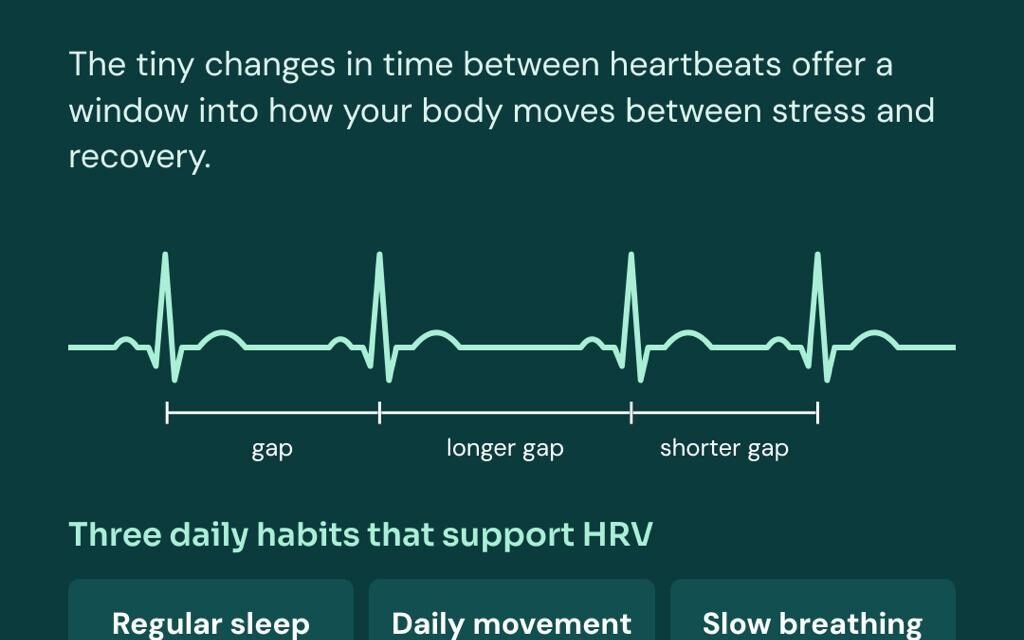
Heart Rate Variability (HRV) refers to the natural variation in the time interval between two consecutive heartbeats.
Many people assume that a healthy heart should beat like a perfectly regular clock. Surprisingly, that’s not entirely true.
A healthy heart doesn’t necessarily beat at identical intervals. Instead, the time between heartbeats changes slightly depending on breathing, physical activity, emotional stress, sleep and other physiological demands.
For example:
- First heartbeat to second heartbeat: 0.90 seconds.
- Second heartbeat to third heartbeat: 0.85 seconds.
- Third heartbeat to fourth heartbeat: 0.95 seconds.
- Fourth heartbeat to fifth heartbeat: 0.88 seconds.
These small variations represent heart rate variability.
HRV is generally measured in milliseconds (ms), using the differences between consecutive normal heartbeat intervals.
A higher HRV often reflects greater flexibility in the body’s cardiovascular regulatory system. However, higher isn’t always better, and the interpretation depends on age, health, measurement methods and individual baseline.
How Does the Autonomic Nervous System Control HRV?
The autonomic nervous system (ANS) controls many functions that happen automatically, including:
- Heart rate.
- Blood pressure.
- Digestion.
- Breathing responses.
- Body temperature.
- Stress responses.
It has two major branches.
- Sympathetic nervous system (SNS)
This is commonly called the fight-or-flight system.
When you experience stress, exercise intensely or face danger, the sympathetic nervous system increases cardiovascular activity.
It generally causes:
- Increased heart rate.
- Increased alertness.
- Greater energy availability.
- Changes in blood pressure.
- Reduced HRV in many resting measurement conditions.
- Parasympathetic nervous system (PNS)
This is commonly called the rest-and-digest system.
It supports recovery, digestion and relaxation. The vagus nerve is a major pathway through which parasympathetic signals influence the heart.
Parasympathetic activity can slow the heart rate and contribute to beat-to-beat variability.
The balance and interaction between these systems help the body adapt to changing demands.
It’s important to understand that HRV isn’t a direct measurement of sympathetic or parasympathetic activity. It is an indirect physiological measure influenced by several regulatory mechanisms.
Why Does HRV Matter for Longevity?
Longevity isn’t simply about living longer. It’s about maintaining physical, metabolic and cognitive function as we age.
HRV is increasingly used in preventive health and performance monitoring because it provides information about cardiovascular regulation and recovery.
A consistently healthy HRV pattern may be associated with:
- Better autonomic adaptability.
- Improved cardiovascular fitness.
- More effective recovery from physical stress.
- Better sleep and recovery patterns.
- Healthier responses to psychological stress.
- Better overall physiological resilience.
However, HRV isn’t a standalone longevity score. It cannot independently predict how long someone will live or diagnose a disease.
For longevity-focused healthcare, HRV becomes more valuable when combined with biomarkers such as HbA1c, fasting insulin, hs-CRP, ApoB, blood pressure, resting heart rate and VO2 max.
2. The Science Behind Heart Rate Variability
Understanding the science behind HRV helps explain why it has become an important measurement in sports science, preventive healthcare and wearable technology.
Sympathetic and Parasympathetic Nervous Systems
The heart continuously responds to signals from the nervous system, hormones, respiration and blood circulation.
Consider what happens during exercise.
Your muscles require more oxygen. Your heart responds by increasing its beating rate. At the same time, the nervous system adjusts cardiovascular function to meet the increased demand.
After exercise, the body gradually returns to its resting state.
The speed and pattern of recovery provide useful information about physiological adaptation.
HRV is one way to observe these changes, particularly during standardized resting measurements.
How Is HRV Calculated?
HRV is calculated using the intervals between successive normal heartbeats, commonly called NN or normal-to-normal intervals.
An electrocardiogram (ECG) identifies the electrical activity associated with each heartbeat. The time between successive R-wave peaks is measured.
For example, consider the following intervals:
| Heartbeat | Interval |
| Beat 1–2 | 850 ms |
| Beat 2–3 | 920 ms |
| Beat 3–4 | 880 ms |
| Beat 4–5 | 950 ms |
| Beat 5–6 | 870 ms |
These intervals are used to calculate different HRV measurements.
Important HRV Measurements
There are several ways to calculate HRV. Each provides slightly different information.
1. RMSSD (Root Mean Square of Successive Differences)
RMSSD measures the average magnitude of differences between successive normal heartbeat intervals.
It is commonly used to assess short-term HRV and is particularly influenced by parasympathetic modulation.
Many wearable devices report overnight HRV using RMSSD or a related transformation.
2. SDNN (Standard Deviation of NN Intervals)
SDNN measures the variation in normal heartbeat intervals over a defined recording period.
It is influenced by several physiological mechanisms and the length of the recording.
A five-minute SDNN measurement cannot be directly compared with a 24-hour SDNN measurement.
3. pNN50
pNN50 represents the percentage of successive normal heartbeat intervals that differ by more than 50 milliseconds.
It is another measure commonly associated with short-term parasympathetic-related variability.
Comparison of Common HRV Metrics
| Metric | What it measures | Common application |
| RMSSD | Successive interval differences | Recovery monitoring |
| SDNN | Overall interval variation | Short- and long-term assessment |
| pNN50 | Percentage of differences above 50 ms | Short-term autonomic assessment |
| HF power | Higher-frequency variability | Respiratory-related cardiac modulation |
| LF power | Lower-frequency variability | Complex cardiovascular regulation |
One common misconception is that LF/HF ratio directly measures sympathetic-to-parasympathetic balance. This interpretation is scientifically disputed and shouldn’t be treated as a simple measure of nervous system balance.
The 2024 methodological recommendations published in Psychophysiology provide useful guidance on the appropriate measurement and interpretation of HRV.
3. What Is a Normal Heart Rate Variability?
One of the most frequently asked questions is: What should my HRV be?
The answer isn’t as simple as assigning everyone a single target number.
HRV varies significantly between individuals. Age, sex, physical fitness, genetics, medications, health conditions, sleep and measurement techniques all influence the result.
HRV by Age
HRV generally declines with ageing, although the degree of decline depends on the measurement method.
Younger individuals often have higher HRV than older adults. However, comparing two people of different ages using one universal reference range can be misleading.
The following table provides broad illustrative categories rather than validated clinical reference ranges.
Age group General HRV tendency
20–29 years Often relatively higher
30–39 years Gradual decline may occur
40–49 years Greater individual variation
50–59 years Often lower than younger adults
60–69 years Further age-related changes
70+ years Often lower, with wide variation
There is no universally accepted normal HRV number for each age group that can be applied across all devices and recording methods.
For example, a person with a stable RMSSD of 35 ms may have a healthy individual baseline, while another person with a reading of 70 ms may experience a significant decline from their usual level.
The key principle is to monitor your personal HRV trend rather than chase a particular number.
Factors That Influence HRV
Several factors can increase or decrease HRV.
| Factor | Typical influence |
| Ageing | Often decreases HRV |
| Regular aerobic exercise | May improve resting HRV over time |
| Poor sleep | Often decreases HRV |
| Chronic psychological stress | May reduce HRV |
| Alcohol consumption | Often reduces overnight HRV |
| Dehydration | Can reduce HRV |
| Acute infection | Often reduces HRV |
| Physical overtraining | May disrupt normal HRV patterns |
| Certain medications | Can change HRV |
| Breathing patterns | Directly influence HRV measurements |
It is also worth remembering that a temporarily low HRV after an intense workout isn’t necessarily a sign of poor health. It may simply reflect the body’s response to an appropriate training stimulus.
4. HRV and Metabolic Health
This is particularly important because metabolic health and cardiovascular health are closely connected.
Insulin resistance, obesity, chronic inflammation, diabetes and hypertension can affect the autonomic nervous system.
Consequently, HRV may provide additional information about physiological health when interpreted alongside established metabolic biomarkers.
HRV and Insulin Resistance
Insulin resistance occurs when cells respond less effectively to insulin.
The pancreas compensates by producing more insulin to maintain normal blood glucose levels.
Over time, this process can contribute to:
- Elevated fasting insulin.
- Increased abdominal fat.
- Higher triglycerides.
- Fatty liver.
- Prediabetes.
- Type 2 diabetes.
Research has identified associations between metabolic dysfunction and altered autonomic regulation.
People with insulin resistance may show differences in HRV compared with metabolically healthy individuals. However, HRV alone cannot establish whether insulin resistance is present.
For a comprehensive metabolic assessment, consider:
| Biomarker | Why it matters |
| Fasting glucose | Measures fasting blood glucose |
| Fasting insulin | Helps assess insulin demand |
| HOMA-IR | Estimates insulin resistance |
| HbA1c | Reflects average glucose over approximately 2–3 months |
| Triglycerides | Provides information about lipid metabolism |
| HDL cholesterol | Helps assess cardiovascular risk |
| ApoB | Measures atherogenic particle burden |
| hs-CRP | Assesses systemic inflammation |
HRV can complement these measurements but cannot replace them.
HRV and Diabetes
Diabetes can affect the autonomic nerves that regulate heart function.
One important complication is diabetic autonomic neuropathy.
This condition can interfere with the normal regulation of heart rate, blood pressure and other involuntary functions.
Reduced HRV may be observed in people with diabetes, sometimes before obvious symptoms of autonomic neuropathy develop.
Potential warning signs of diabetic autonomic neuropathy include:
- Dizziness when standing.
- Abnormal resting heart rate.
- Exercise intolerance.
- Digestive disturbances.
- Unusual sweating patterns.
- Changes in blood pressure regulation.
In clinical practice, HRV-related autonomic testing may be considered when diabetic autonomic neuropathy is suspected.
HRV and Cardiovascular Health
The cardiovascular system and autonomic nervous system work together to regulate circulation.
HRV can provide supplementary information about cardiovascular regulation.
Lower HRV has been associated with certain cardiovascular risk states and adverse outcomes in specific clinical populations.
However, a low HRV reading doesn’t mean that someone has heart disease.
For a more meaningful cardiovascular assessment, HRV should be evaluated alongside:
- Blood pressure.
- Resting heart rate.
- Lipid profile.
- ApoB.
- Lipoprotein(a).
- ECG, where clinically indicated.
- Coronary artery calcium assessment, where appropriate.
- VO2 max or cardiorespiratory fitness.
HRV and Inflammation
Chronic low-grade inflammation is associated with several age-related conditions, including metabolic syndrome, cardiovascular disease and type 2 diabetes.
Inflammatory signalling and autonomic regulation interact in complex ways.
HRV may change during inflammatory states, acute infections and chronic disease.
However, HRV isn’t an inflammation test.
If inflammation is a concern, hs-CRP and other clinically appropriate investigations provide more direct information.
Longevity insight: HRV is most useful as part of a broader metabolic and cardiovascular dashboard rather than as an isolated health score.
5. How to Measure Heart Rate Variability
HRV measurement has become easier because modern wearable devices can monitor pulse patterns during sleep and rest.
However, not all devices use the same technology or measurement approach.
- Electrocardiogram (ECG)
ECG records the electrical activity of the heart.
It is a well-established method for measuring heartbeat intervals and identifying abnormal rhythms.
- Chest straps
Chest straps use electrical signals to measure heartbeat timing. Compatible devices can provide useful HRV measurements, especially when recording conditions are standardized.
- Smartwatches and fitness trackers
Many smartwatches use photoplethysmography (PPG), an optical technique that detects changes in blood volume under the skin.
These devices can provide useful trends, especially during sleep, although motion, sensor fit and signal quality can affect accuracy.
Popular HRV Tracking Devices
Some commonly used wearable platforms include:
- Apple Watch.
- Oura Ring.
- WHOOP.
- Garmin.
- Polar.
Each platform may use different sampling methods, algorithms and reporting periods. Therefore, HRV values from different brands aren’t necessarily interchangeable.
What Is the Best Time to Measure HRV?
Consistency is more important than measuring repeatedly throughout the day.
A practical approach is:
- Measure HRV at approximately the same time each day.
- Prefer overnight measurements or standardized morning readings.
- Maintain a consistent body position.
- Avoid talking or moving during manual measurements.
- Record sleep, exercise and illness alongside HRV.
- Evaluate weekly and monthly trends.
Avoid comparing an overnight HRV measurement with a short reading taken immediately after exercise.
How to Interpret HRV Trends
A simple monitoring approach is to establish a personal baseline over several weeks.
For example:
| Day | HRV (ms) | Possible interpretation |
| Monday | 42 | Within personal baseline |
| Tuesday | 45 | Within personal baseline |
| Wednesday | 41 | Within personal baseline |
| Thursday | 32 | Lower than baseline |
| Friday | 29 | Continued reduction |
| Saturday | 38 | Partial recovery |
| Sunday | 44 | Return towards baseline |
This example illustrates why trends are more useful than isolated readings.
If HRV remains unusually low alongside fatigue, poor sleep or other symptoms, consider reducing training intensity and assessing possible causes.
Persistent or unexplained changes should be discussed with a healthcare professional.
6. Eleven Powerful Ways to Improve HRV Naturally
Improving HRV is not about finding a shortcut or supplement that produces a higher number overnight.
The most sustainable approach is to improve the underlying factors that influence cardiovascular fitness, autonomic regulation, sleep and metabolic health.
Here are eleven evidence-informed strategies.
1. Exercise Regularly
Regular physical activity is one of the most important lifestyle interventions for cardiovascular health.
Aerobic exercise can improve cardiorespiratory fitness and may improve resting HRV over time.
Recommended activities include:
- Brisk walking.
- Cycling.
- Swimming.
- Jogging.
- Low-impact aerobic exercise.
For most adults, a practical target is 150–300 minutes of moderate-intensity aerobic activity each week, together with muscle-strengthening activities on at least two days.
Start gradually if you’re inactive or have existing medical conditions.
2. Prioritize Quality Sleep
Sleep is essential for cardiovascular and metabolic recovery.
Poor sleep can disrupt autonomic regulation and contribute to lower overnight HRV.
To improve sleep quality:
- Maintain a consistent sleep schedule.
- Aim for approximately 7–9 hours of sleep.
- Keep your bedroom dark and comfortable.
- Avoid heavy meals close to bedtime.
- Reduce screen exposure before sleeping.
- Limit caffeine later in the day.
If you snore heavily, wake up gasping or experience persistent daytime sleepiness, consider screening for obstructive sleep apnoea.
3. Manage Psychological Stress
Chronic psychological stress can affect the autonomic nervous system.
Work pressure, financial worries, relationship difficulties and continuous digital stimulation can all interfere with recovery.
Useful stress-management practices include:
- Meditation.
- Mindfulness.
- Yoga.
- Journaling.
- Spending time outdoors.
- Regular breaks from digital devices.
Even 10–15 minutes of daily relaxation can help establish a more consistent recovery routine.
- Practice Controlled Breathing
Breathing and HRV are closely connected through a phenomenon called respiratory sinus arrhythmia.
During inhalation, heart rate usually increases slightly. During exhalation, it generally decreases.
Slow, comfortable breathing can increase certain HRV measurements during the breathing session.
A simple breathing exercise:
- Sit comfortably.
- Inhale gently for four seconds.
- Exhale gently for six seconds.
- Continue for five minutes.
- Avoid forcing or holding your breath.
This is a relaxation exercise, not a guaranteed way to permanently increase resting HRV.
Stop if you feel dizzy or uncomfortable.
5. Improve Nutrition and Hydration
Nutrition affects cardiovascular health, metabolic function and recovery.
A plant-rich dietary pattern can support overall health.
Include:
- Leafy green vegetables.
- Cruciferous vegetables.
- Berries and other whole fruits.
- Nuts and seeds.
- Pulses and legumes.
- Healthy sources of unsaturated fats.
- Adequate protein.
Stay adequately hydrated, particularly during exercise or hot weather.
For metabolic health, focus on minimally processed foods and limit excessive refined carbohydrates, added sugars and highly processed foods.
6. Maintain Healthy Blood Sugar Levels
Blood glucose regulation and autonomic function are connected.
Long-term metabolic dysfunction can contribute to cardiovascular and neurological complications.
Useful preventive measures include:
- Monitoring fasting glucose.
- Checking HbA1c when appropriate.
- Assessing fasting insulin is clinically useful.
- Maintaining a healthy waist circumference.
- Walking after meals.
- Avoiding frequent consumption of sugar-sweetened beverages.
For people with diabetes, good glucose management may help reduce the risk of long-term complications.
HRV should not be used as a substitute for glucose monitoring.
7. Maintain a Healthy Body Weight
Excess body fat, particularly visceral abdominal fat, is associated with several metabolic risk factors.
Weight management through nutrition, physical activity and adequate sleep can improve cardiometabolic health.
A gradual and sustainable approach is preferable to extreme calorie restriction.
Focus on improving body composition, preserving muscle mass and reducing excessive abdominal fat.
8. Allow Adequate Recovery
Exercise is beneficial, but recovery matters too.
Excessive training without adequate recovery may lead to persistent fatigue and disturbed HRV patterns.
Build recovery into your routine through:
- Rest days.
- Low-intensity activity.
- Adequate protein intake.
- Sufficient sleep.
- Progressive training loads.
A temporary HRV reduction after strenuous exercise is common. The important question is whether your body returns towards its normal baseline.
9. Support Your Circadian Rhythm
Your body’s internal clock influences sleep, hormones, metabolism and autonomic activity.
A disrupted circadian rhythm can affect recovery and overall health.
Helpful habits include:
- Getting natural morning light.
- Maintaining consistent meal times.
- Exercising regularly.
- Reducing bright light exposure late at night.
- Keeping sleep and wake times consistent.
10. Avoid Smoking and Limit Alcohol
Smoking damages blood vessels and increases cardiovascular risk.
Alcohol can also affect overnight HRV and sleep quality.
Reducing alcohol consumption and avoiding tobacco are sensible steps for long-term cardiovascular health.
If you already avoid alcohol and tobacco, maintain those habits.
11. Build Strong Social Connections
Social relationships can influence psychological wellbeing and stress responses.
Spending quality time with family, friends and supportive communities may help reduce chronic stress.
Consider:
- Meaningful conversations.
- Group walking.
- Shared recreational activities.
- Community participation.
- Regular time with loved ones.
Healthy social connections are an often-overlooked part of healthy ageing.
7. HRV, Healthy Ageing and Longevity
One of the most exciting areas of preventive healthcare is understanding how the autonomic nervous system changes during ageing.
As we age, several physiological systems undergo changes:
- Cardiovascular flexibility may decline.
- Muscle mass and physical fitness may decrease.
- Sleep patterns may become less consistent.
- Insulin sensitivity may deteriorate.
- Chronic low-grade inflammation may increase.
- Autonomic regulation may become less adaptable.
HRV provides one additional way to monitor aspects of this physiological adaptation.
Can HRV Predict Biological Age?
HRV has been studied as a potential marker of physiological ageing.
Some studies have found associations between lower HRV and ageing-related health conditions.
However, HRV cannot independently determine biological age.
Biological ageing is multidimensional. It involves changes in DNA regulation, cellular senescence, mitochondrial function, inflammation, metabolic health and tissue repair.
For a more comprehensive longevity assessment, HRV can be combined with:
| Longevity parameter | What it evaluates |
| HRV | Cardiac autonomic regulation |
| VO2 max | Cardiorespiratory fitness |
| HbA1c | Long-term glucose regulation |
| Fasting insulin | Insulin demand |
| hs-CRP | Systemic inflammation |
| ApoB | Atherogenic lipoprotein particles |
| Lp(a) | Inherited cardiovascular risk |
| Grip strength | Muscle function |
| Waist circumference | Abdominal adiposity |
| Sleep quality | Recovery and circadian health |
The goal isn’t simply to achieve a high HRV score. It’s to maintain cardiovascular resilience, metabolic flexibility, muscle function and overall independence as you age.
8. Common HRV Tracking Mistakes
Although wearable technology makes HRV accessible, incorrect interpretation can lead to unnecessary anxiety or poor lifestyle decisions.
Here are eight mistakes to avoid.
- Comparing your HRV with someone else’s
HRV differs considerably between individuals. Your personal baseline is more useful than someone else’s score.
- Assuming higher HRV is always better
An unusually high reading may reflect measurement errors or other physiological changes. Context matters.
- Using different devices for comparison
Different brands may use different algorithms and measurement periods.
- Measuring immediately after exercise
Exercise changes heart rate and autonomic activity. Resting and recovery measurements should be distinguished.
- Ignoring sleep quality
A poor night’s sleep can influence the next morning’s HRV.
- Chasing daily improvements
HRV naturally fluctuates. Focus on weekly and monthly trends.
- Treating HRV as a medical diagnosis
A smartwatch cannot diagnose cardiovascular disease, diabetes or autonomic neuropathy.
- Ignoring symptoms
Chest pain, fainting, unexplained breathlessness and significant palpitations require appropriate medical evaluation regardless of HRV.
The 2026 research guidelines on HRV measurement and interpretation also emphasize the importance of standardized methods and caution when interpreting wearable data.
PubMed+1
9. Frequently Asked Questions (FAQs)
1. What is a good HRV score?
There is no universal ideal HRV score. It depends on age, health, fitness, measurement duration and the device used. The most useful approach is to establish your personal baseline and monitor changes over time.
2. Is an HRV of 30 ms good or bad?
An HRV of 30 ms isn’t automatically unhealthy. If it’s your usual stable reading, it may be normal for you. However, a persistent decline from your baseline, especially with fatigue or other symptoms, deserves attention.
3. Does higher HRV mean better cardiovascular health?
Higher HRV can be associated with better cardiovascular adaptability in certain contexts. However, it isn’t a direct measure of heart health and cannot independently establish cardiovascular risk.
4. Can walking improve HRV?
Yes. Regular walking and other aerobic activities can improve cardiovascular fitness and may improve resting HRV over time. Consistency is more important than intensity.
5. Can meditation increase HRV?
Meditation and relaxation practices may improve some HRV measurements, particularly during the practice itself. Long-term effects vary between individuals.
6. Does alcohol reduce HRV?
Alcohol commonly reduces overnight HRV and can disrupt sleep and recovery. Reducing or avoiding alcohol may help improve these patterns.
7. What is the relationship between HRV and diabetes?
Diabetes can affect autonomic nerve function, potentially reducing HRV. HRV may be useful in assessing autonomic changes, but it cannot diagnose diabetes or replace HbA1c and glucose testing.
8. Can HRV indicate stress?
HRV can provide information about physiological responses associated with stress. However, it isn’t a direct stress measurement. Physical activity, sleep, illness, medication and breathing also influence it.
9. Which wearable is best for measuring HRV?
Apple Watch, Oura Ring, WHOOP, Garmin and Polar offer different HRV monitoring capabilities. The best option depends on measurement consistency, recording quality, features and personal requirements.
10. Can HRV improve with age?
Although HRV often declines with ageing, regular exercise, adequate sleep, stress management and good metabolic health may support healthier autonomic function. Age-related decline cannot necessarily be eliminated.
11. Should I measure HRV every day?
Daily measurements can be useful if they’re collected consistently. However, you should focus on longer-term trends rather than reacting to every daily fluctuation.
10. Conclusion: Make HRV Part of Your Longevity Strategy
Heart Rate Variability is an important and increasingly accessible physiological measurement that offers insights into cardiovascular regulation, recovery and autonomic function.
It provides an opportunity to understand how your body responds to everyday stress, exercise, sleep and lifestyle changes.
However, HRV should never be viewed as an isolated measure of health or longevity.
The most effective strategy is to combine consistent HRV tracking with evidence-based lifestyle interventions and established metabolic and cardiovascular biomarkers.
Start with five simple actions:
- Exercise regularly and improve cardiovascular fitness.
- Sleep consistently for 7–9 hours.
- Practice daily relaxation and controlled breathing.
- Maintain healthy blood glucose and body composition.
- Monitor HRV alongside other health biomarkers.
Remember, the objective isn’t to achieve the highest HRV score. It’s to build a healthier, more resilient body that can adapt to stress and recover effectively.
Measure intelligently. Understand your biomarkers. Improve your lifestyle. Age better.